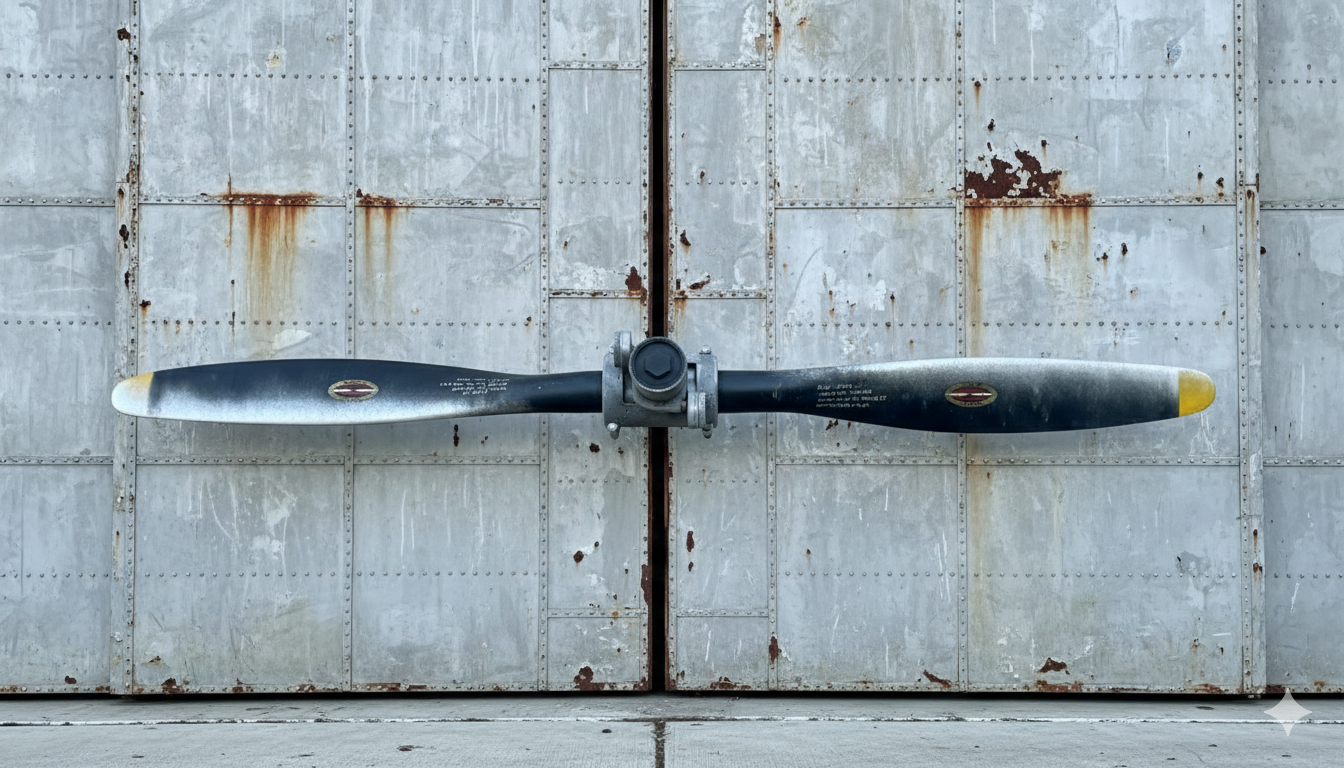
The propeller that shaped a generation of fighter pilots.
The 12D40 hub and 6101A-12 blade combination is best known as the propeller fitted to North American's T-6 Texan — the aircraft the U.S. Army Air Forces, Navy, and Royal Air Force all turned to for the same job: turning raw cadets into fighter pilots. Flown as the AT-6 by the USAAF, the SNJ by the Navy, and the Harvard by Commonwealth air arms, it earned the nickname "the Pilot Maker" for a reason — nearly every American combat pilot of the 1940s logged hours behind this exact propeller before they ever touched a fighter.
Mounted on the nine-cylinder Pratt & Whitney R-1340-AN-1 Wasp, a 600-horsepower air-cooled radial, the 12D40/6101A-12 spun a 9-foot, two-blade constant speed, variable-pitch propeller built to be forgiving in a student's hands and honest about every mistake. The pairing carried the Texan through World War II flight schools, into Cold War service, and — in some Harvard variants — onto actual combat missions decades later, including counter-insurgency operations in the 1970s.
What makes this hub / blade combination worth building isn't rarity. In fact, it was fitted to literally thousands of aircraft, specifically the most-produced trainer in aviation history. So it's the opposite: this is the propeller more pilots stared through than any other in the 20th century. Building it full size isn't building something exotic. It's building the thing that helped train the people who flew just about everything else.
Every dimension below is drawn from period parts catalogs, airworthiness directives and maintenance documentation — not guessed or estimated from photographs. Manufacturing specifics for the printable replica are listed separately below.
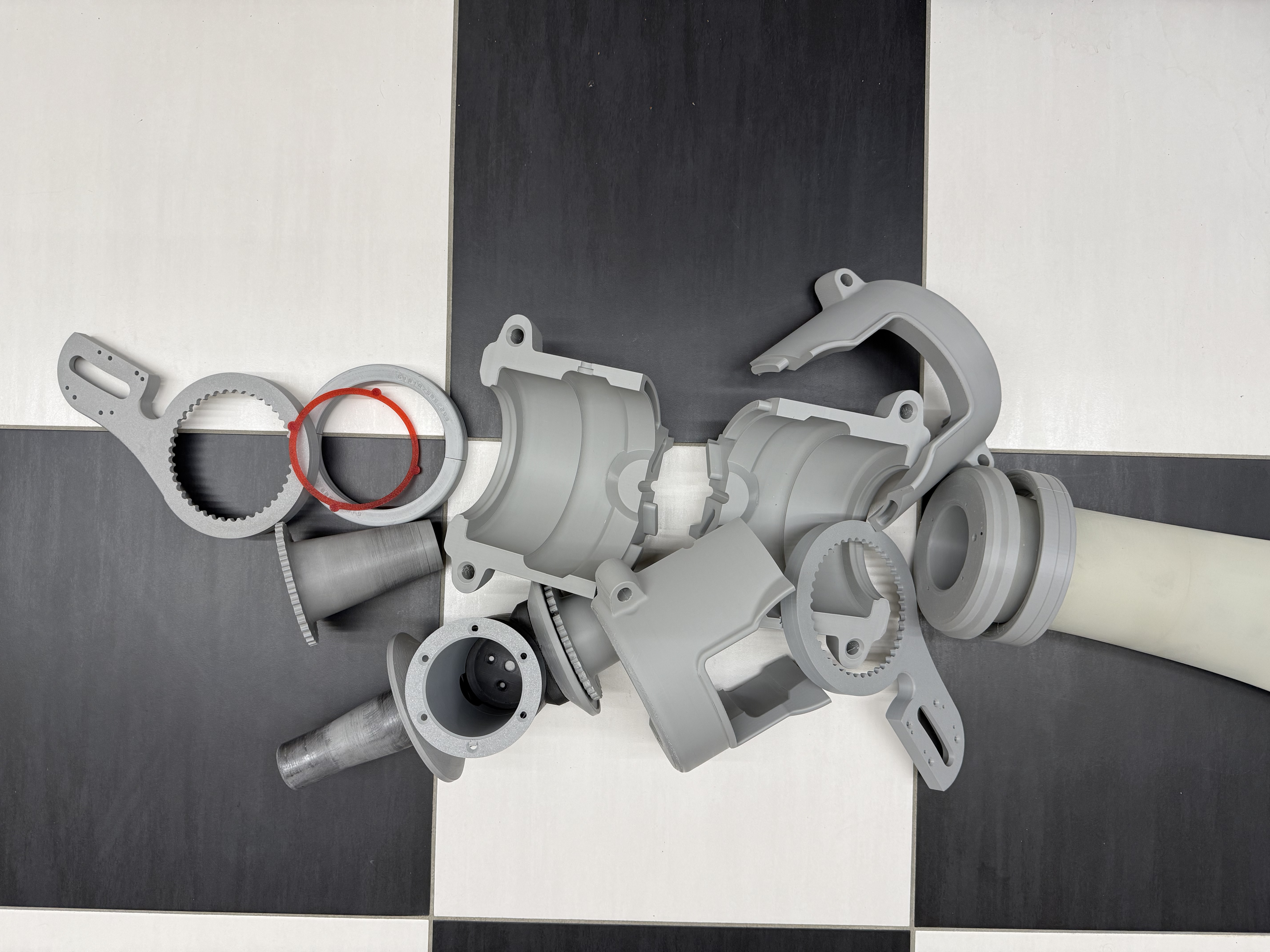
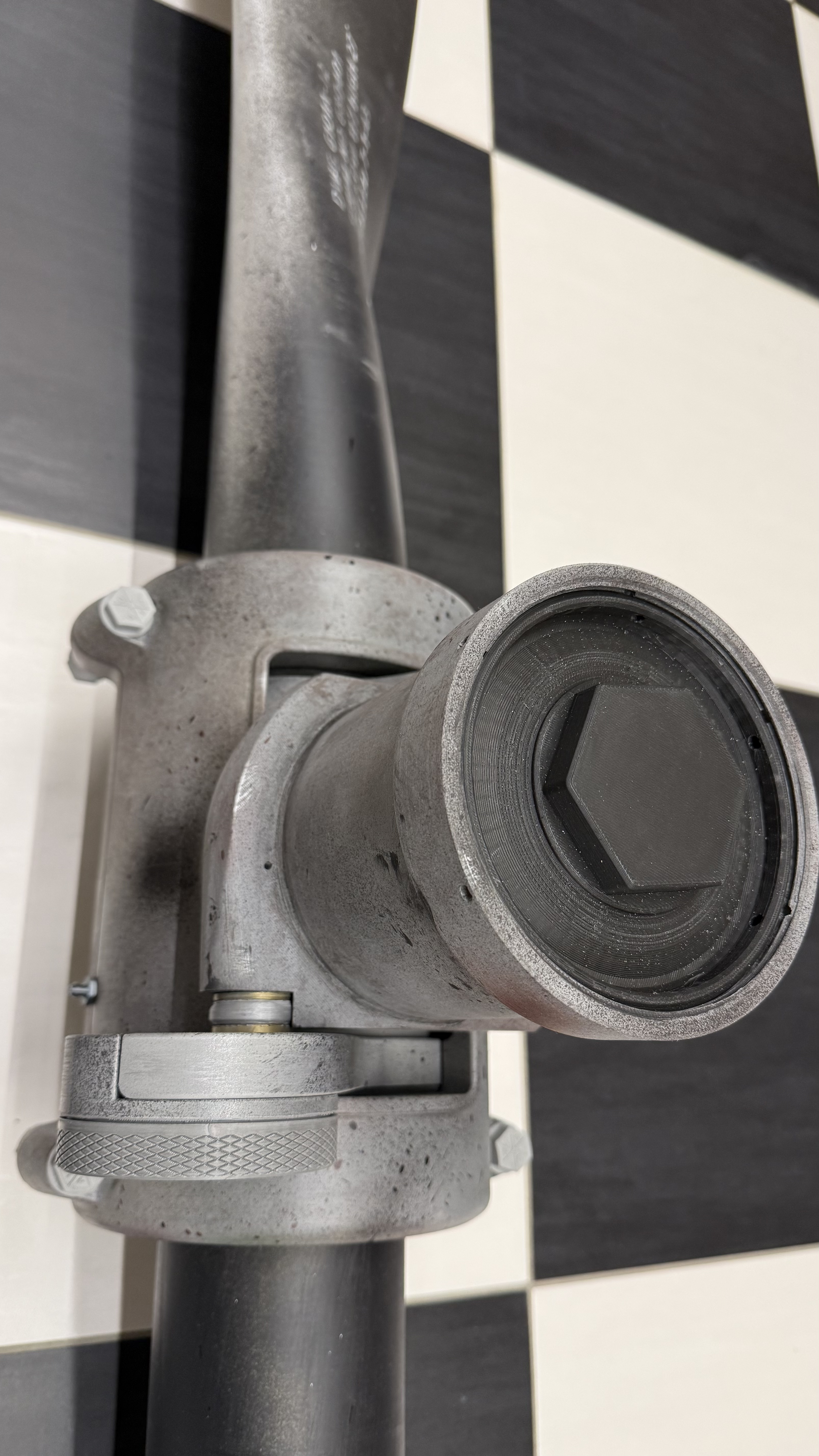
Manufacturing specifics for this replica:
A note for the detail-obsessed: this exact hub-and-blade pairing was common enough to earn its own line item in period airworthiness directives — Model 12D40 propellers fitted with 6101A-12 blades were required to have their blade roots inspected for cracking at intervals not exceeding 600 flight hours. It's a small detail, but it confirms this wasn't a rare or experimental fitting — it was a working, maintained, inspected piece of everyday flight-school equipment, flown hard enough that the inspection schedule mattered.
The same three-stage process used across every model in the catalog — full detail on each stage lives on the homepage process guide.

Ready to build the legend, full size, full stop?